Honda
Honda NSX
Launched in 1990, the NSX was built with a clear mission: prove that a supercar could be fast, sophisticated, and reliable every day, and it had help from a Formula 1 driver to get there.
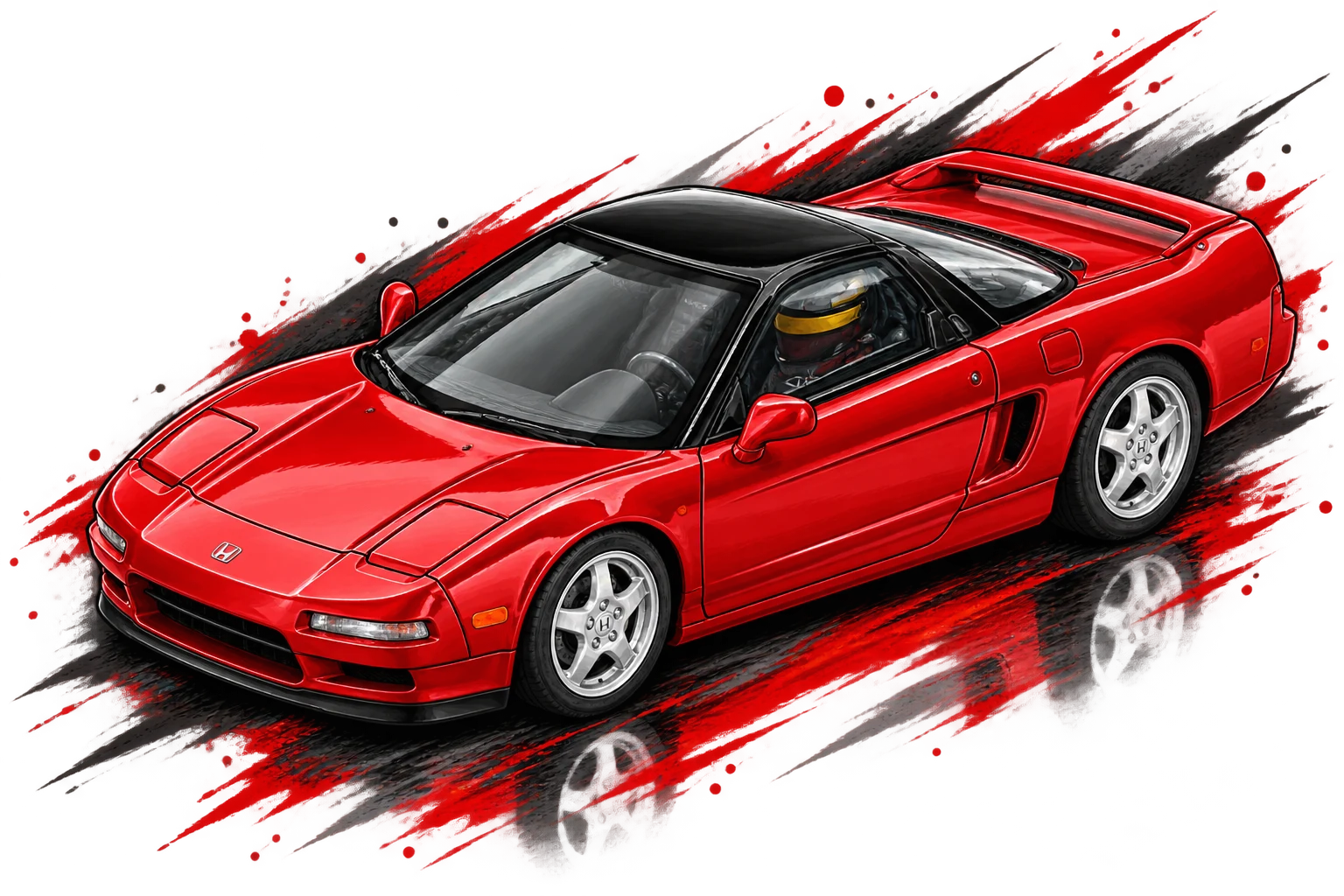
Ayrton Senna took part in the NSX's development, testing prototypes and pushing for more structural rigidity and sharper cornering behavior, a real collaboration, not marketing legend, documented by Honda itself. The result was the first mass-production car with an all-aluminum monocoque body, an engineering leap that cut weight without sacrificing stiffness.
A mid-mounted VTEC V6, a precise manual gearbox, and a far more approachable driving character than contemporaries like the Ferrari 348, the NSX sold the idea of a supercar you could actually drive every day, and delivered on it. In the United States it was sold as the Acura NSX; everywhere else, the Honda NSX. Production ran with barely any structural changes until 2005.
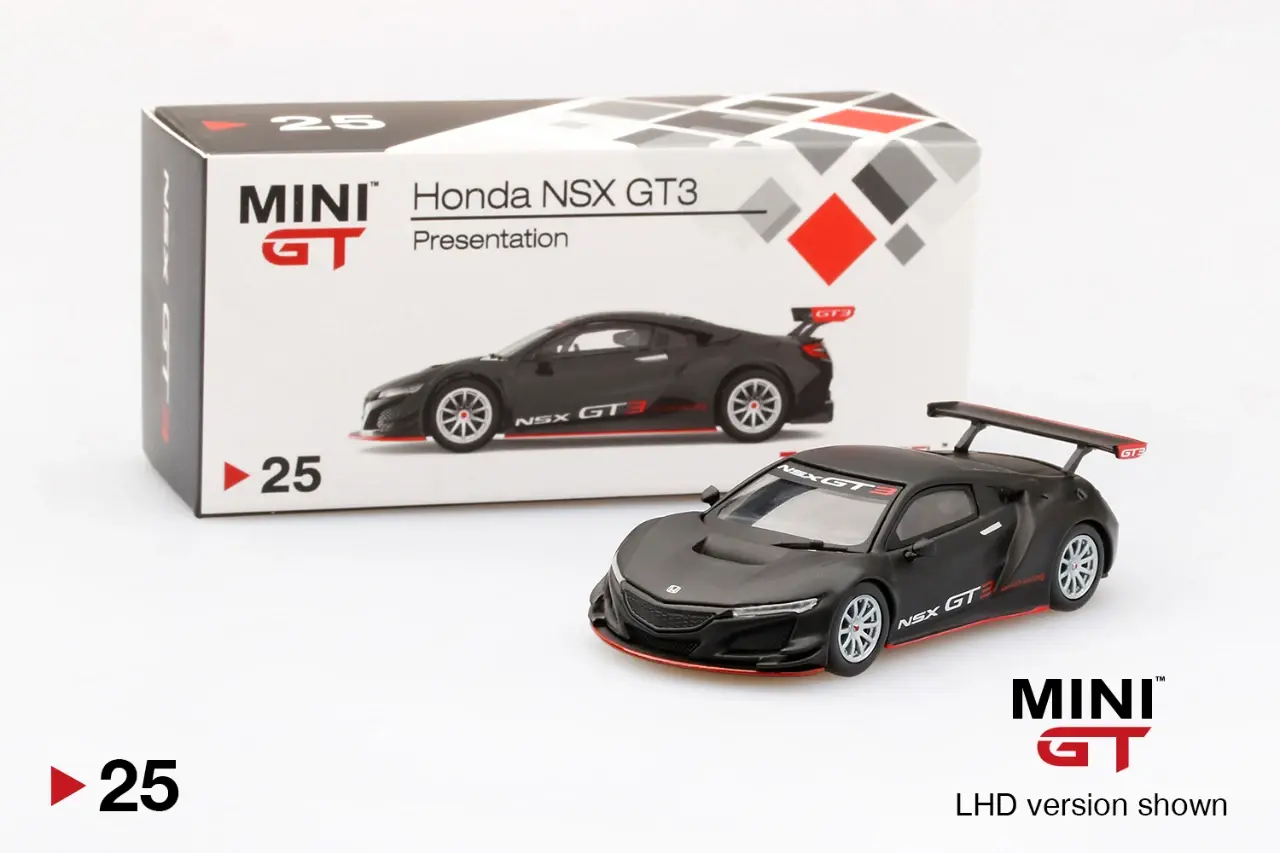
The second generation (2016-2022) flipped the formula: a hybrid twin-turbo V6 with three electric motors, built in Ohio, USA, the first time an Acura NSX rolled off a factory line outside Japan. The racing version, the NSX GT3, still competes today in series like IMSA and Super GT.
- Ayrton Senna personally tested NSX prototypes and pushed Honda for more structural rigidity, the final car reflects that rework.
- The original NSX was the first mass-production car with an all-aluminum monocoque body.
- In the US and Canada the car is called the Acura NSX; everywhere else, the Honda NSX, same car, different names.
- The second-generation NSX was the first to be built outside Japan, at a factory in Ohio.
Honda NSX in the catalog
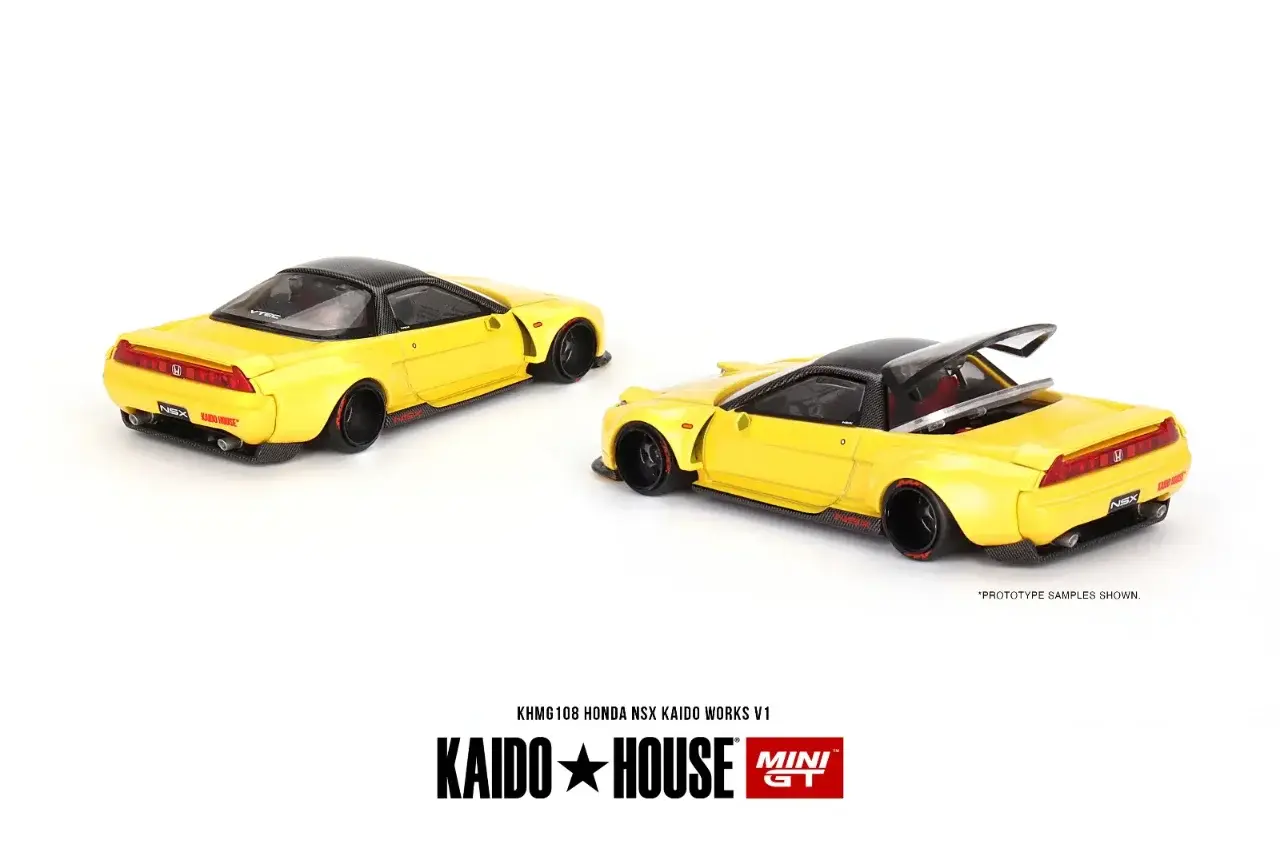
Honda NSX Kaido Works V1
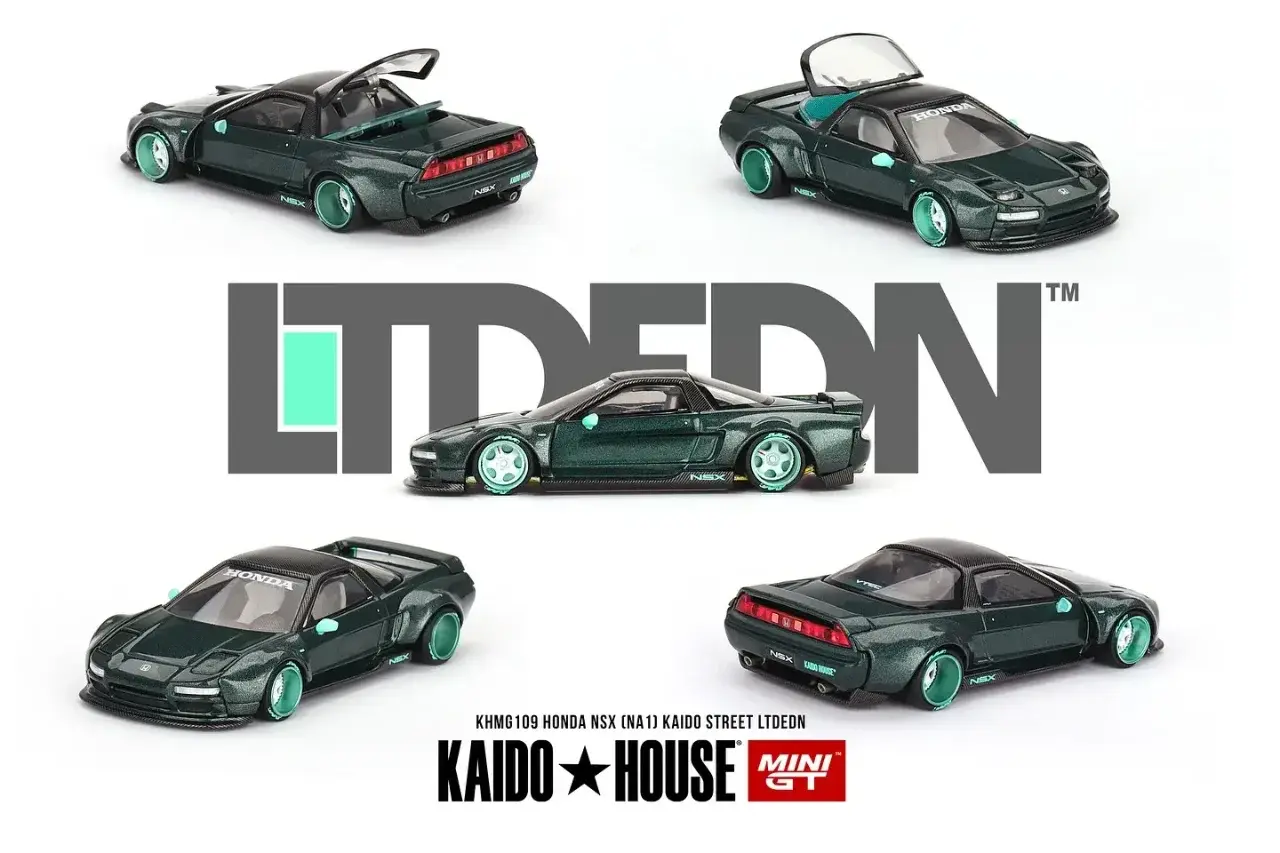
Honda NSX (NA1) Kaido Street LTDEDN
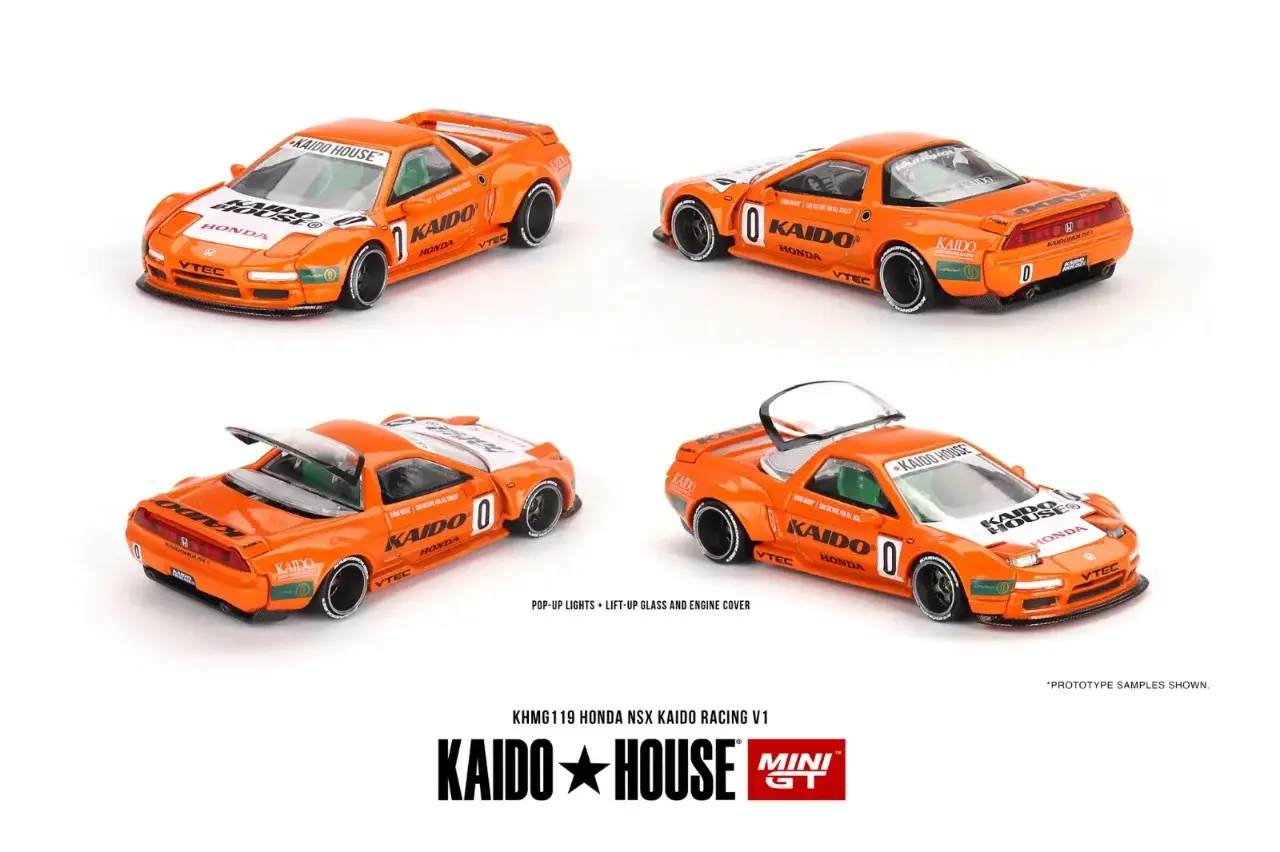
Honda NSX Kaido Racing V1
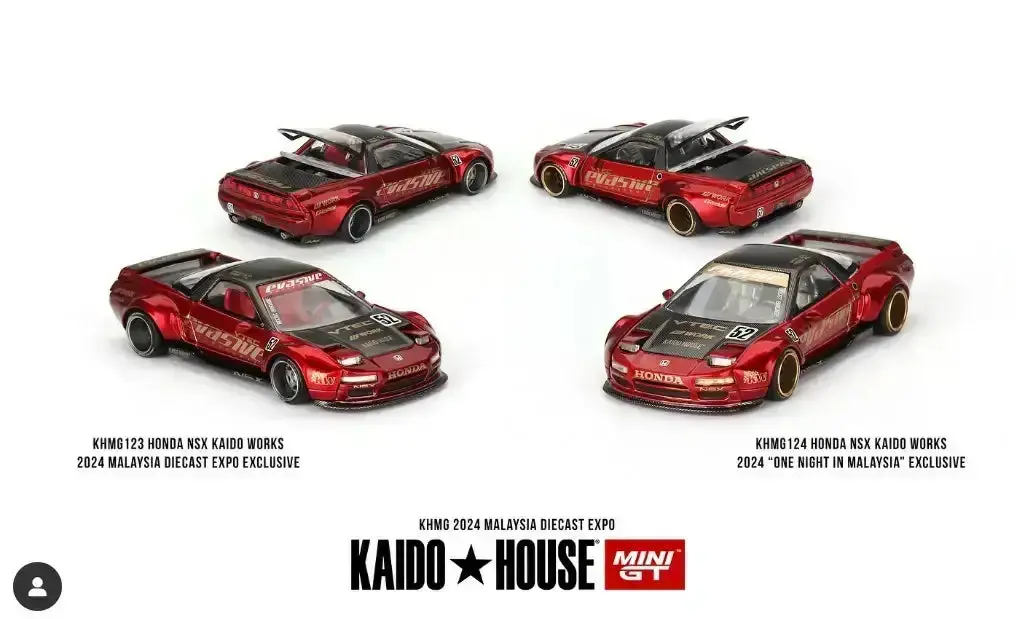
Honda NSX Kaido Works 2024 Malaysia Diecast Expo Exclusive
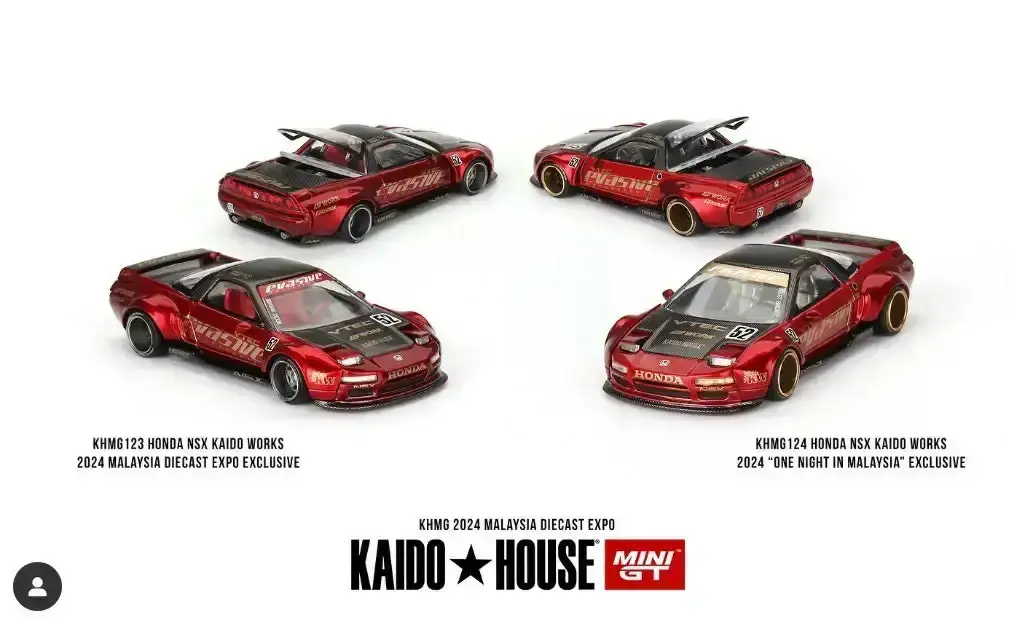
Honda NSX Kaido Works 2024 "One Night In Malaysia" Exclusive
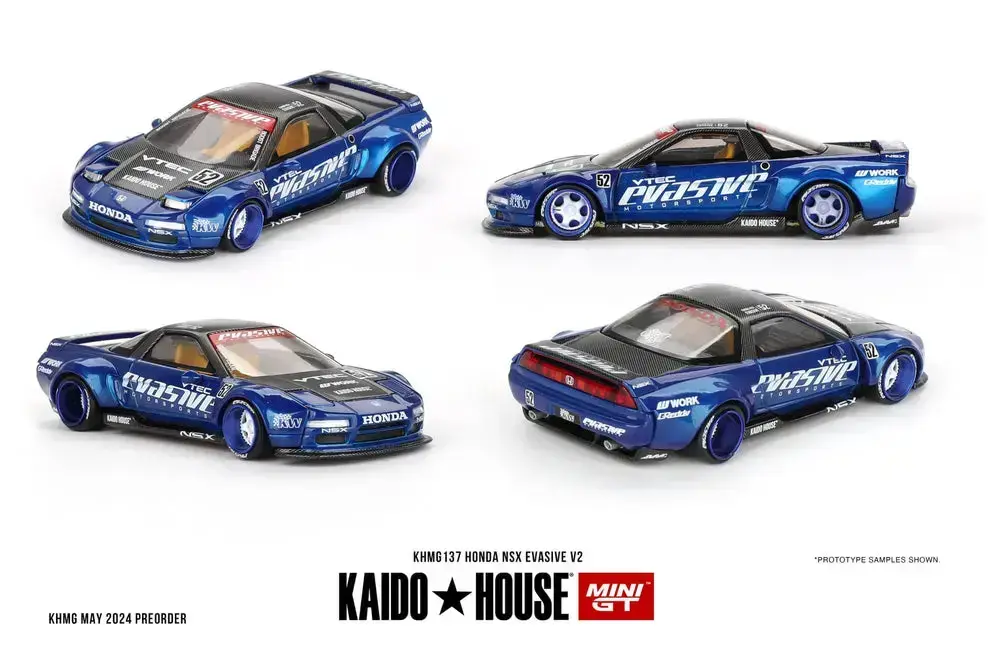
Honda NSX Evasive V2
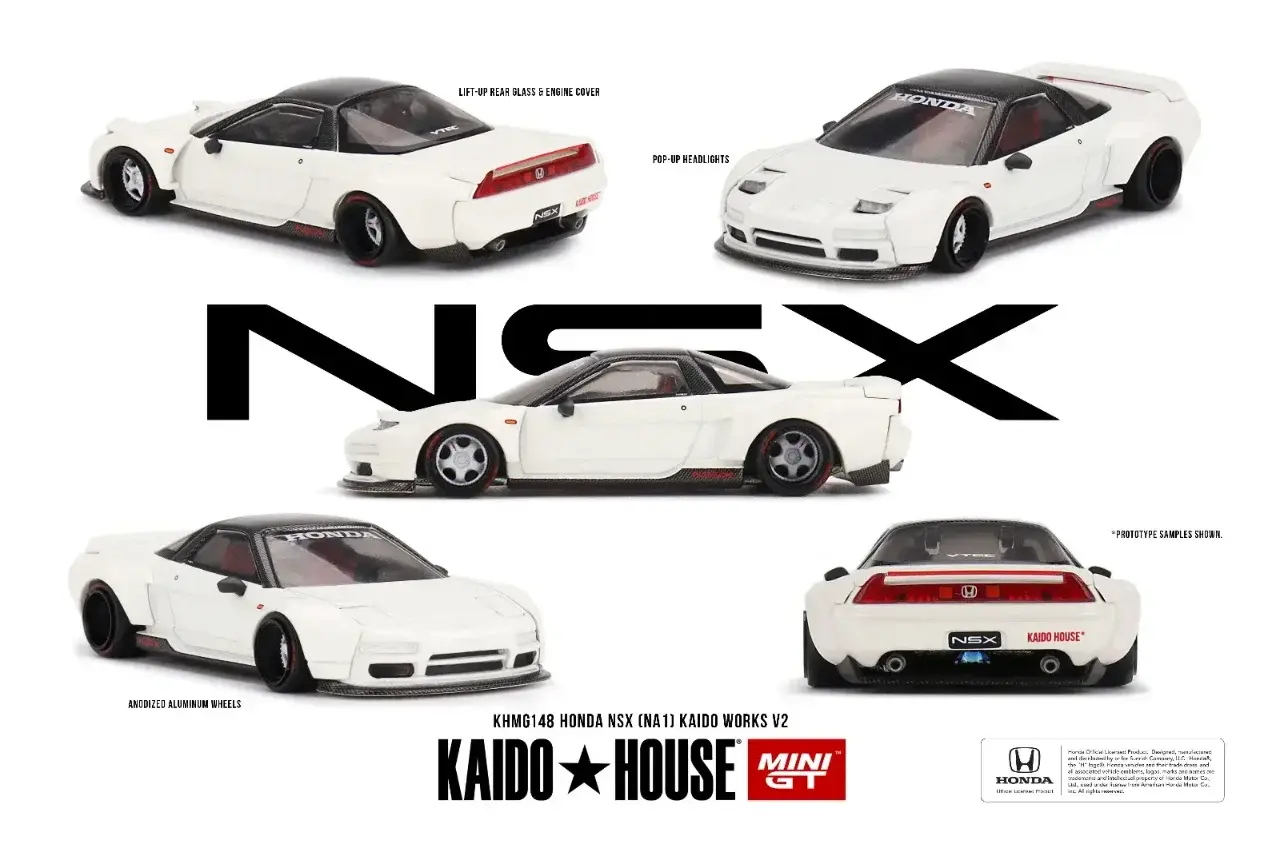
Honda NSX (NA1) Kaido WORKS V2
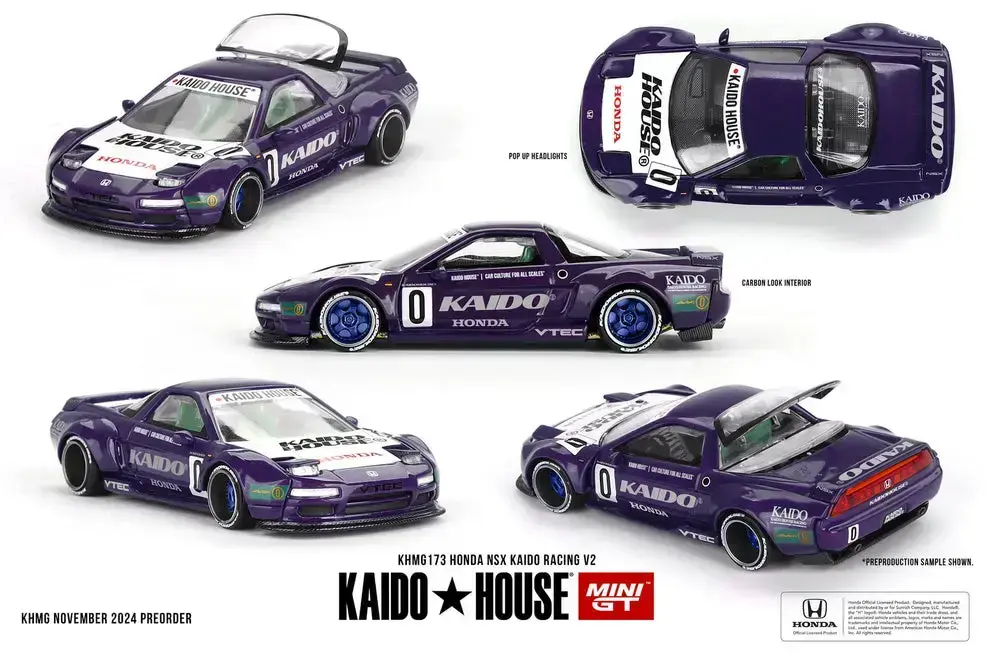
Honda NSX Kaido Racing V2
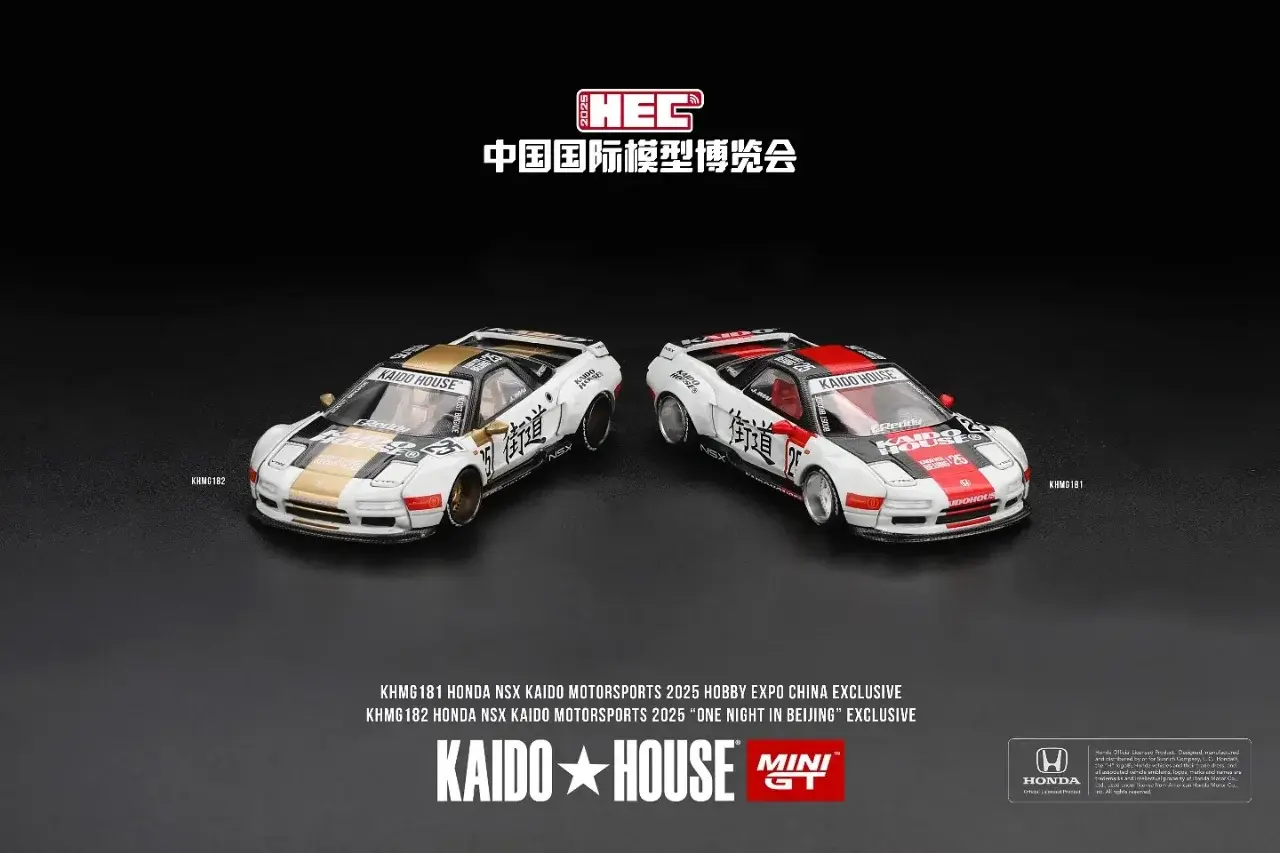
Honda NSX Kaido Motorsports 2025 Hobby Expo China Exclusive
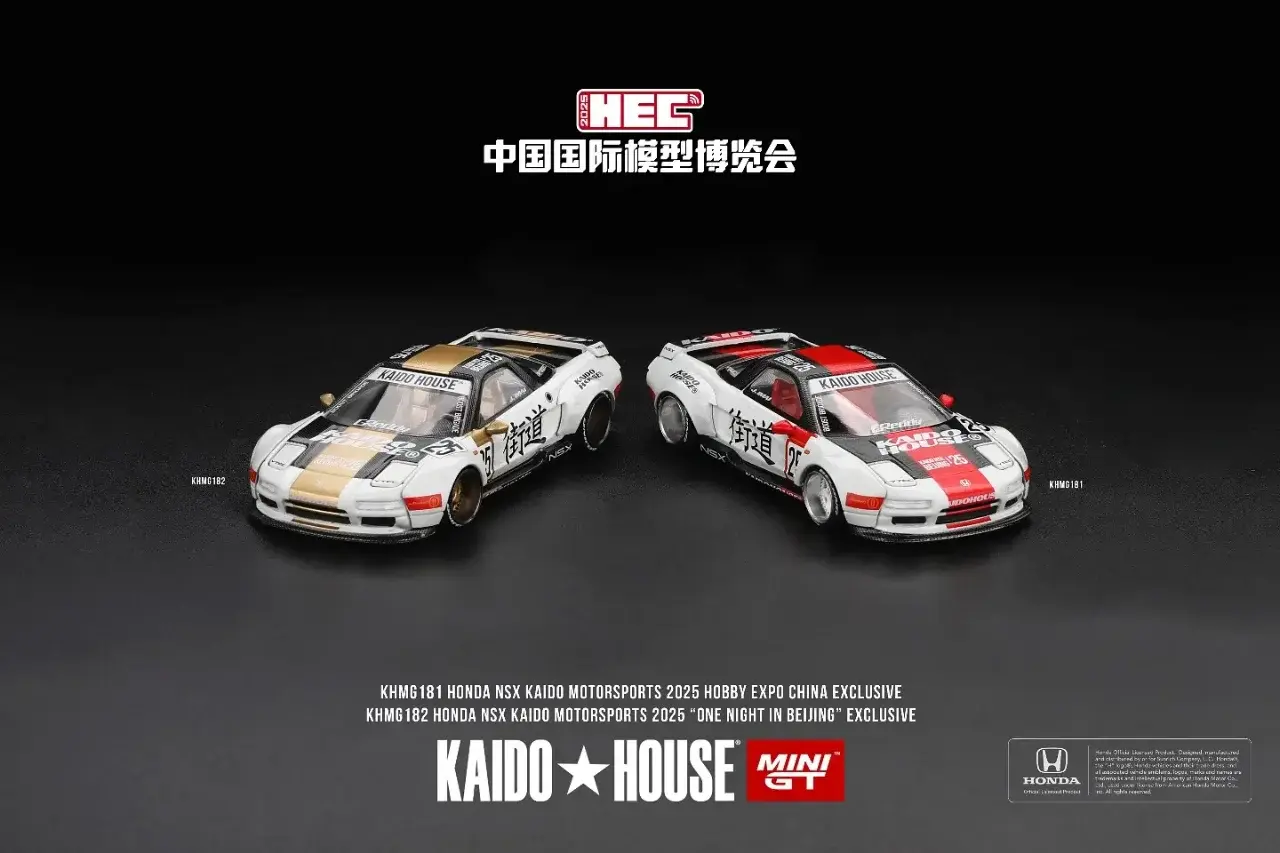
Honda NSX Kaido Motorsports 2025 “One Night in Beijing” Exclusive Dinner
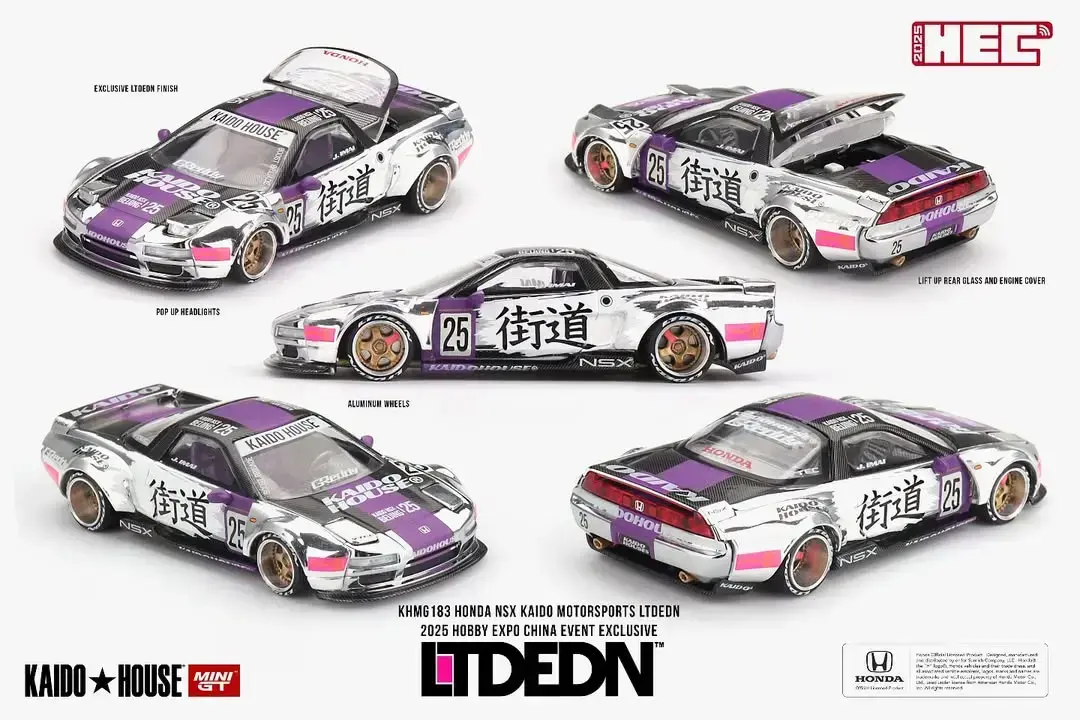
Honda NSX Kaido Motorsports LTDEDN 2025 Hobby Expo China Exclusive
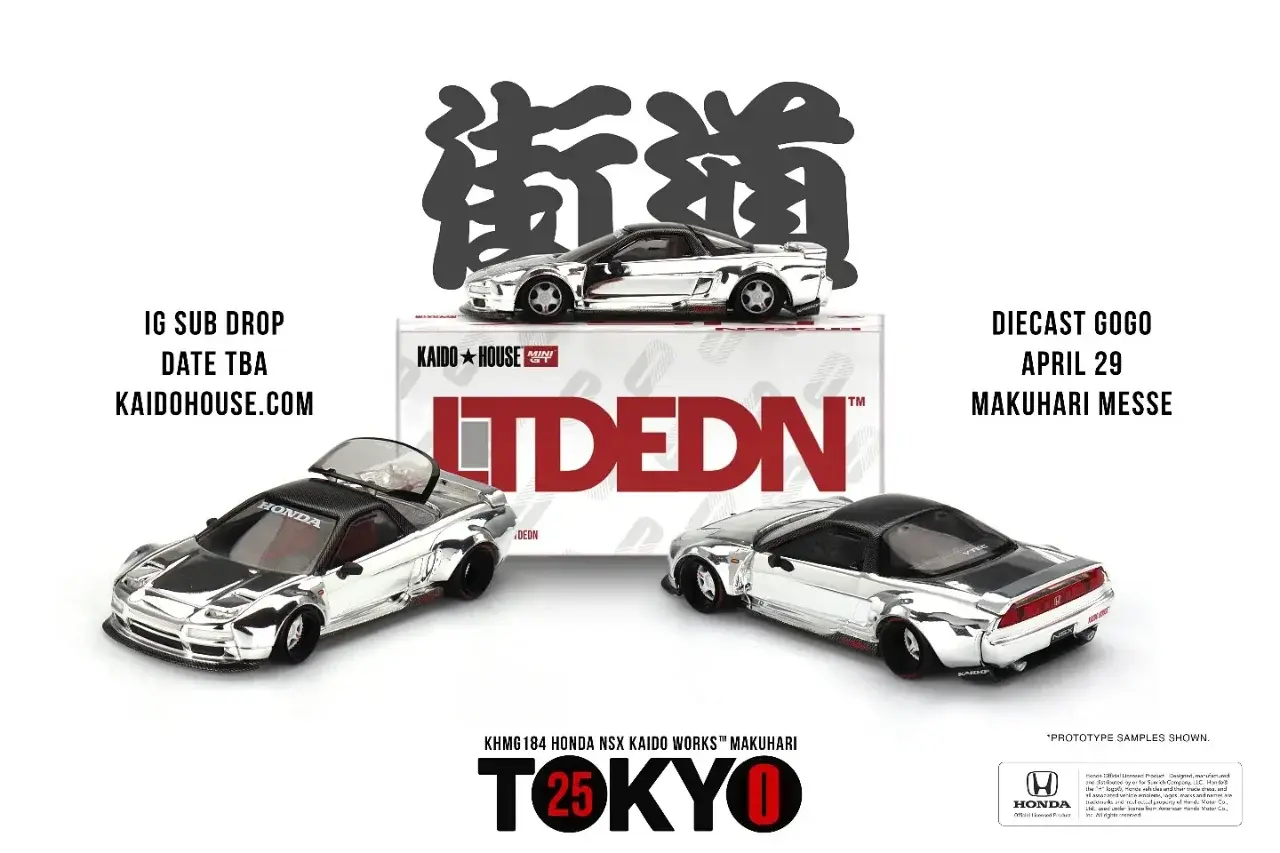
Honda NSX Kaido Works Makuhari
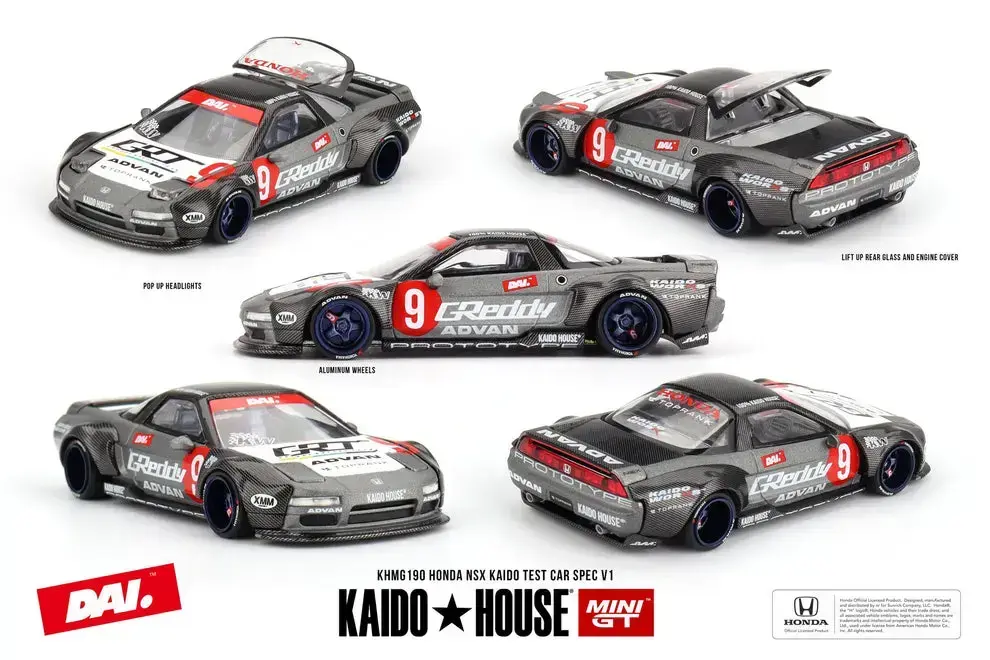
Honda NSX Kaido Test Car Spec V1
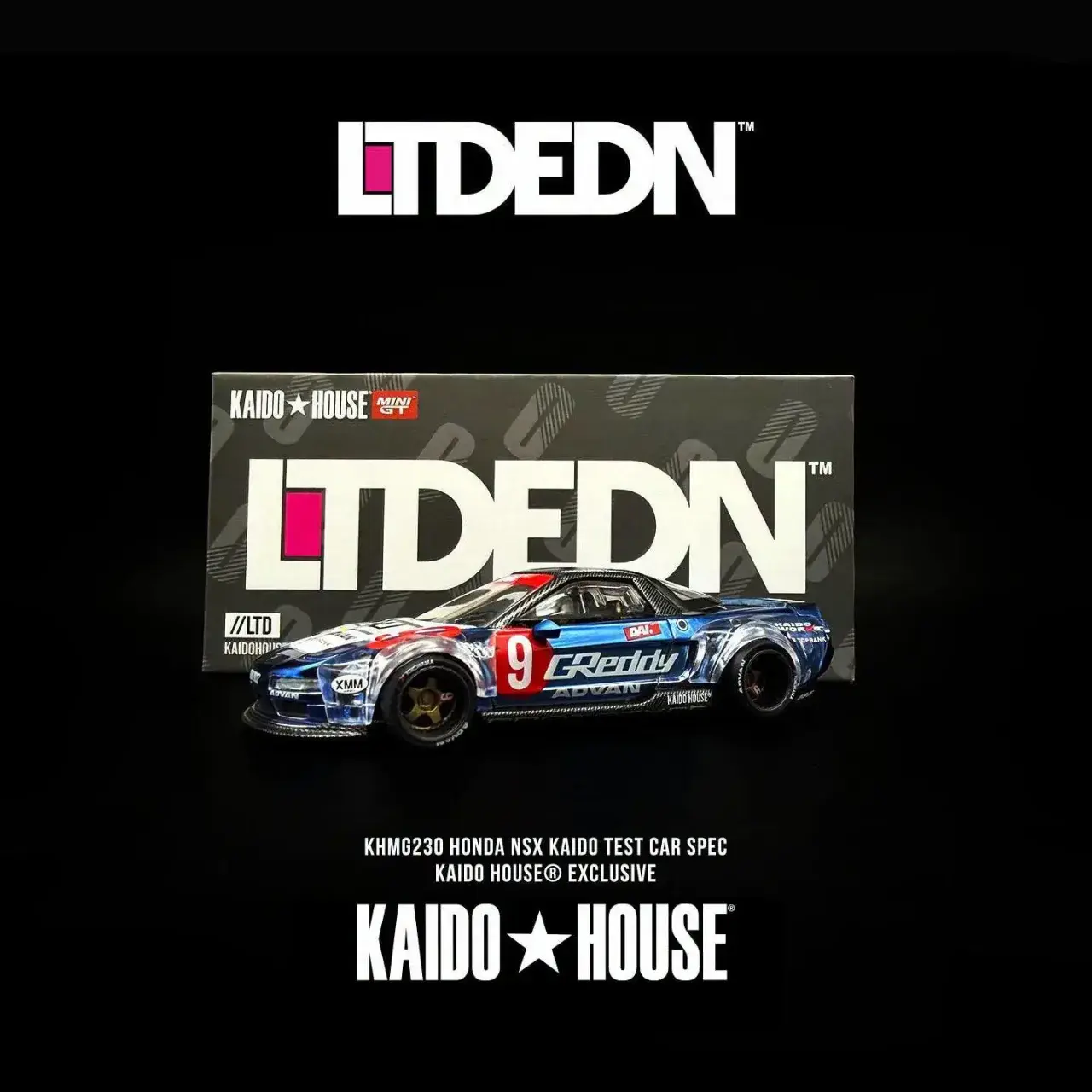
Honda NSX Kaido Test Car Spec LTDEDN
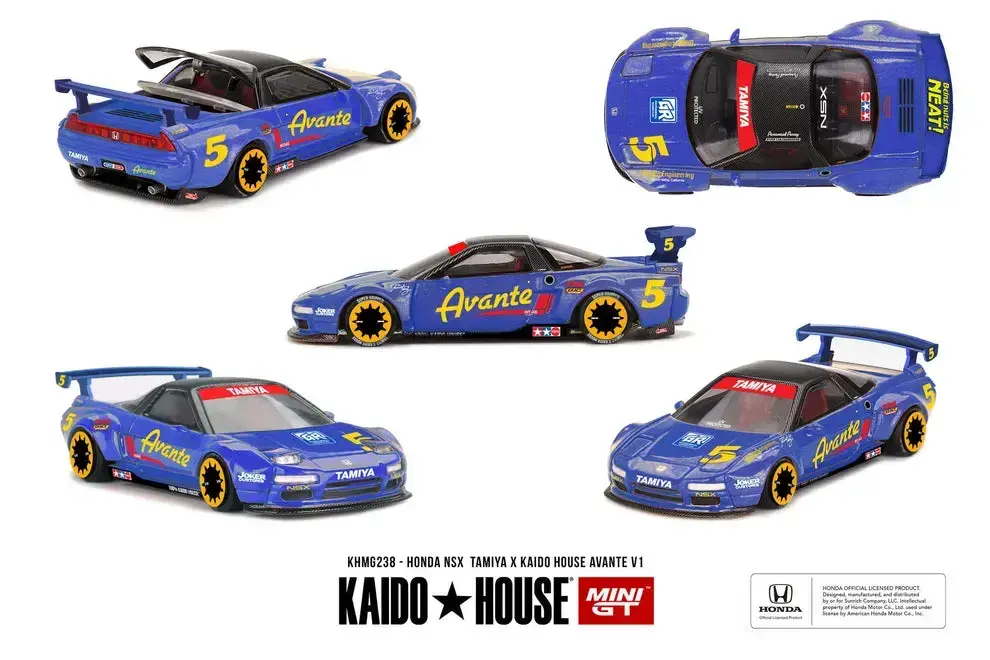
Honda NSX TAMIYA x KAIDO HOUSE "AVANTE" V1
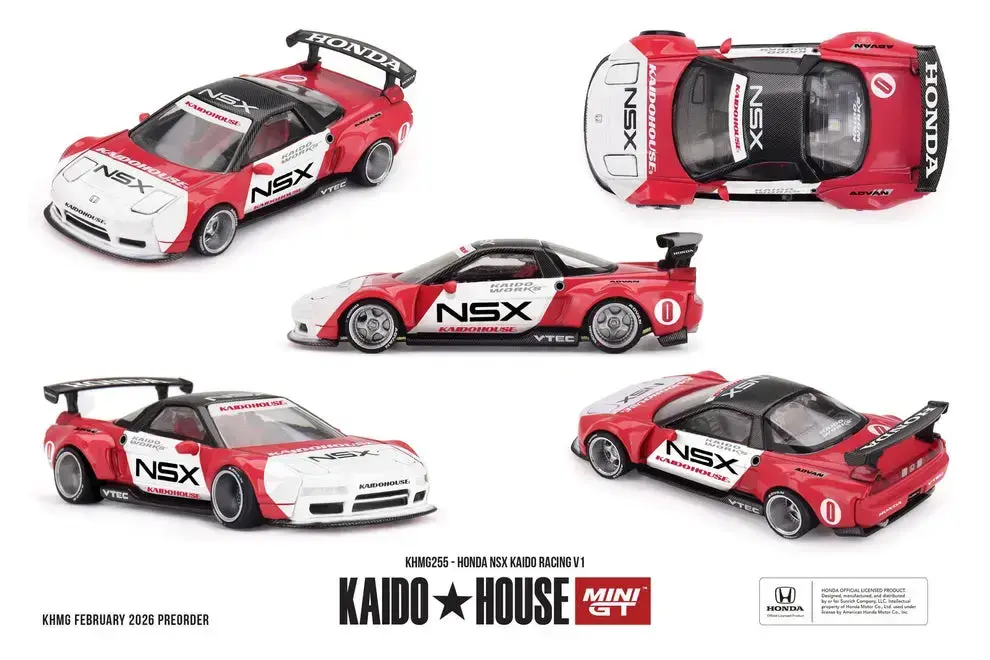
Honda NSX Kaido Racing V1
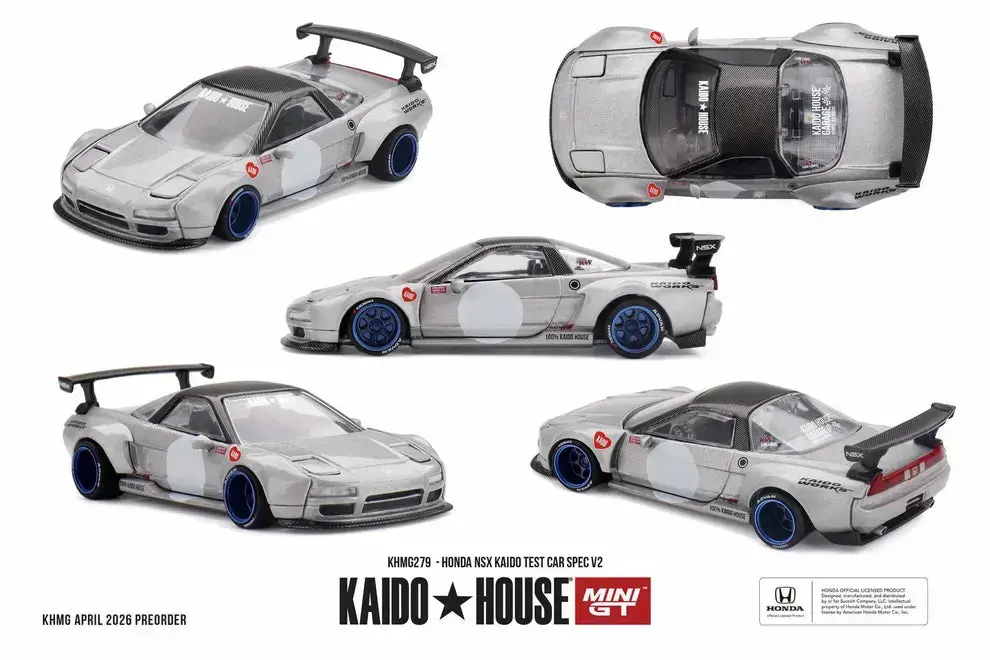
Honda NSX Kaido Test Car Spec V2
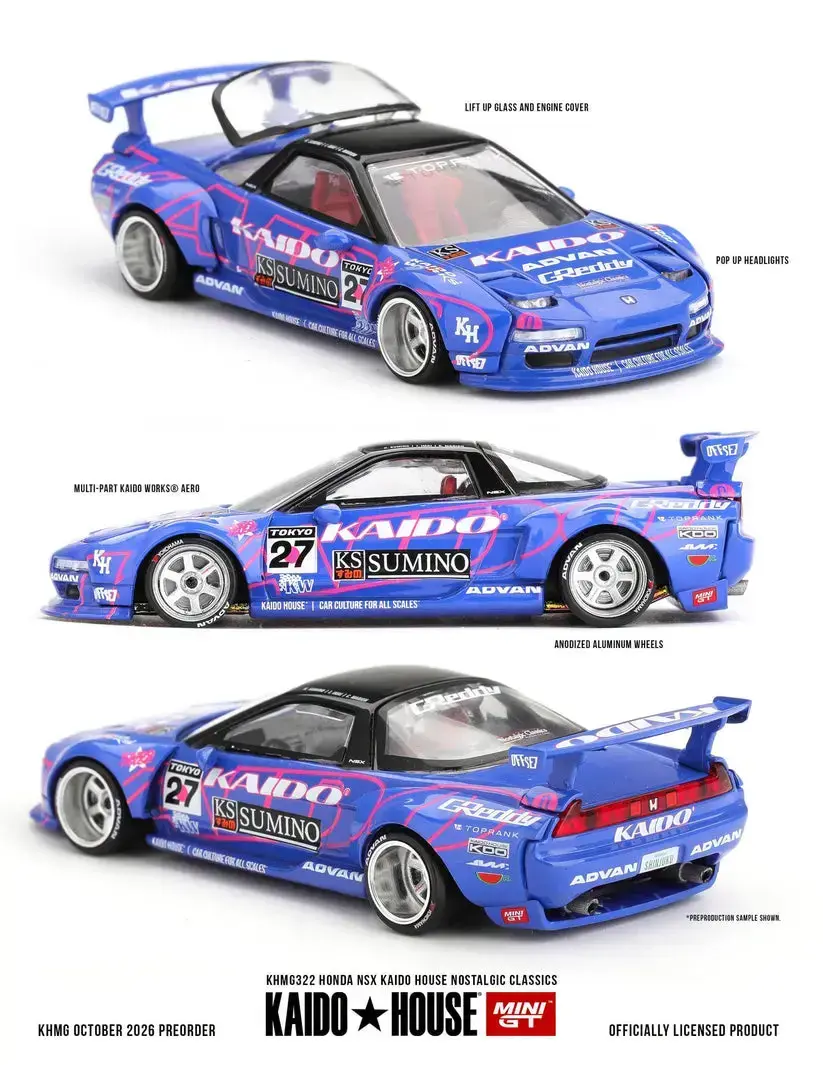
Honda NSX Kaido House Nostalgic Classics
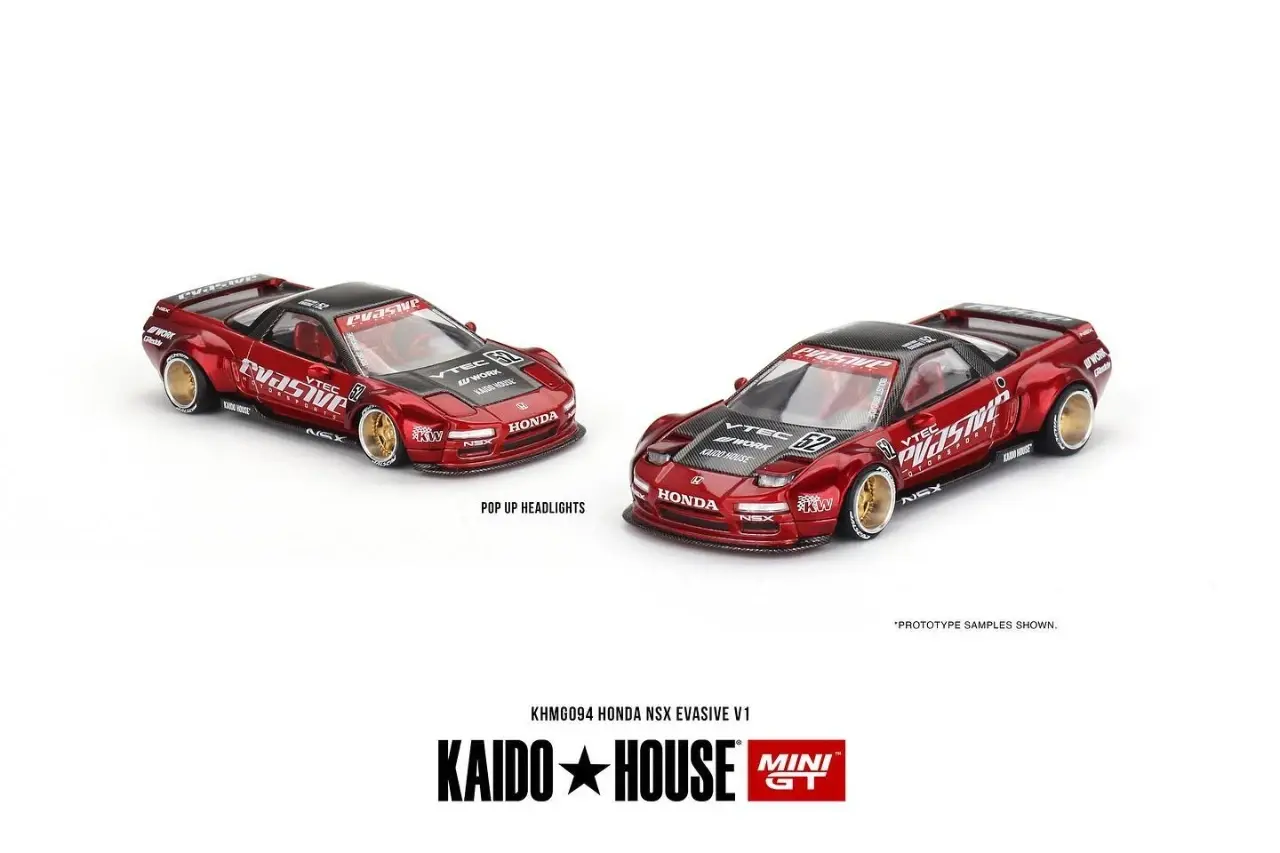
Honda NSX Evasive V1
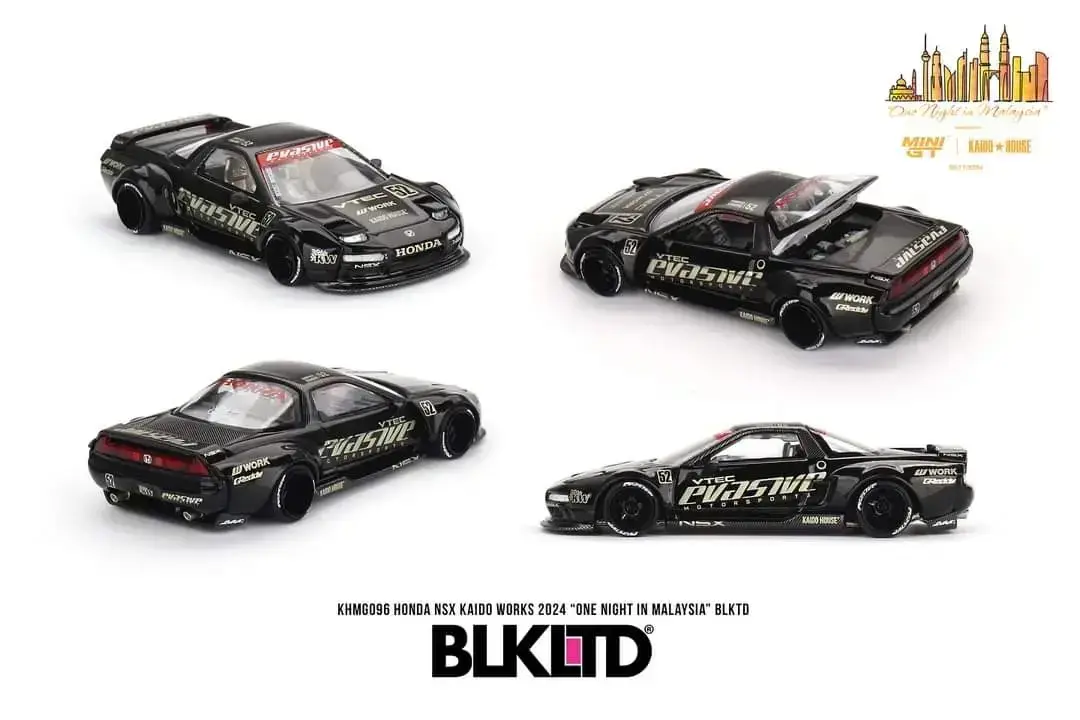
Honda NSX Kaido Works 2024 "One Night In Malaysia" BLKLTD
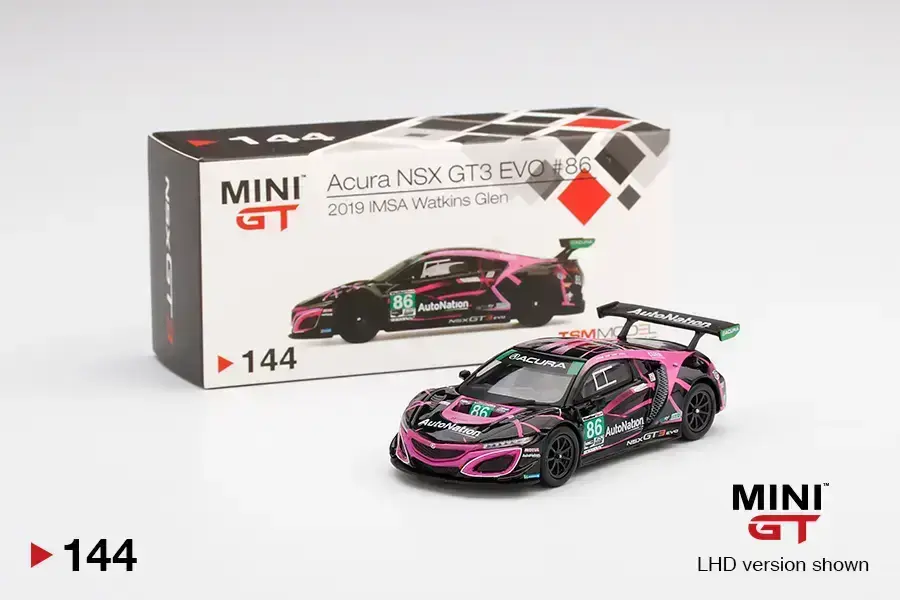
Acura NSX GT3 EVO #86 2019 IMSA Watkins Glen Class Winner
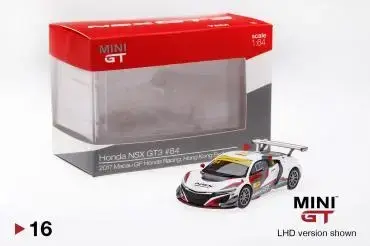
Honda NSX GT3 #84
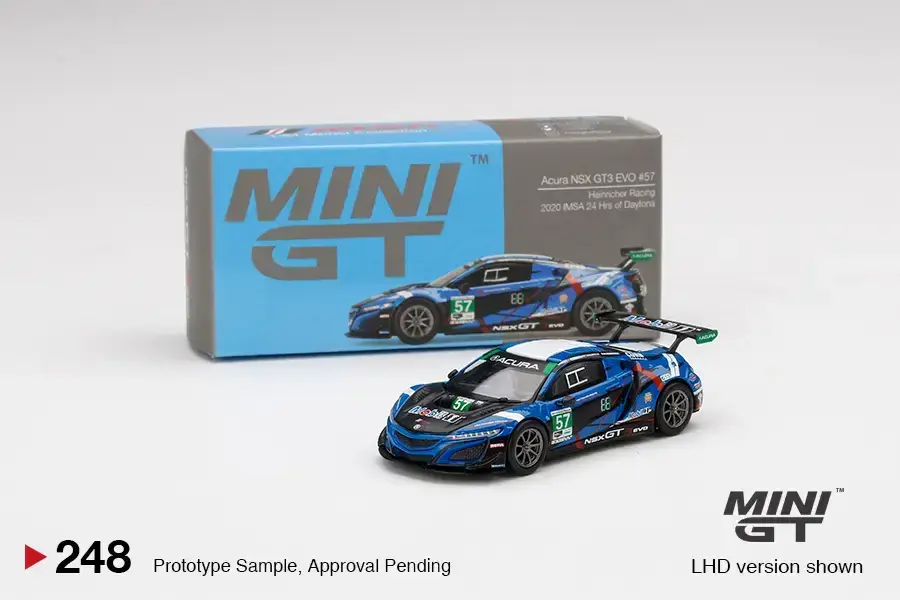
Acura NSX GT3 EVO #57 2020 IMSA 24 Hrs of Daytona